
Any links on this page that lead to products on Amazon and other companies may be affiliate links and we earn a commission if you make a qualifying purchase. Thanks in advance for your support!
Can you use chilli for heartburn? Chilli peppers usually trigger it, but eating them regularly may dull the pain over time. Capsaicin, the hot compound in chillies, can desensitise pain nerves with repeated use, and small studies found daily chilli reduced indigestion-type pain after a few weeks. But a single dose of chilli tends to make heartburn worse, and it masks pain rather than stopping reflux.
Last reviewed: November 2026
Key Takeaways
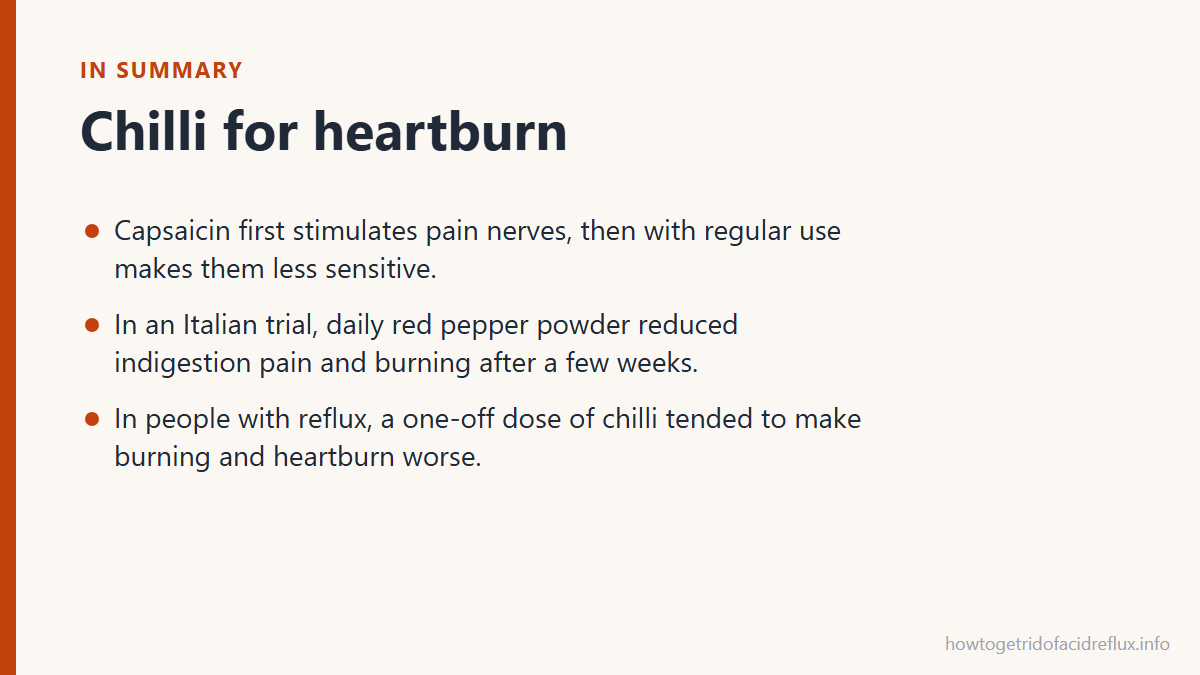
- Capsaicin first stimulates pain nerves, then with regular use makes them less sensitive.
- In an Italian trial, daily red pepper powder reduced indigestion pain and burning after a few weeks.
- In people with reflux, a one-off dose of chilli tended to make burning and heartburn worse.
- Chilli doesn’t stop acid reflux, so any damage to the esophagus can continue unnoticed.
- If you try it, go slowly, be consistent, and tell your doctor.
Chilli peppers are nearly always on the list of foods to avoid with heartburn, so it may surprise you that some people use them to quench the fire. So is there anything in it?
How Could Chilli Help Heartburn?
The key is capsaicin, the compound that makes chillies hot. It acts on a pain receptor called TRPV1, found in the lining of the gut. The first exposure causes burning, but repeated exposure possibly “wears out” these receptors and depletes the chemical messenger that carries pain signals. That’s the same reason capsaicin creams are used for joint and nerve pain (Patcharatrakul & Gonlachanvit, 2016).
What Does the Research Show?
- Long-term use may help. In an Italian trial, people with functional dyspepsia (indigestion with no obvious cause) who took red pepper powder daily for five weeks had less pain, fullness and nausea than those on placebo (Bortolotti et al., 2002). Thai researchers have reported similar effects with regular chilli eating, and a 2010 article in the Journal of Neurogastroenterology and Motility discussed this too. The key seems to be consistency: stopping and starting brings the pain back.
- A single dose tends to make reflux worse. When people with reflux took a 2 g capsule of chilli in a controlled Thai study, they had more abdominal burning and a trend towards more heartburn than with a placebo (Patcharatrakul et al., 2020).
So chilli is a double-edged sword. It may help some people over time, but it will probably hurt at first.
Does Chilli Cure Reflux?
No. Using chilli this way appears to mask the pain by desensitising pain receptors. It doesn’t stop acid from refluxing, so any damage to the esophagus could carry on without you feeling it. If you have frequent reflux, see your doctor before relying on chilli, and don’t ignore warning signs such as difficulty swallowing or weight loss.
How to Try Chilli for Heartburn
- Talk to your doctor first, especially if you have ulcers, esophagitis or Barrett’s esophagus.
- Start very small, with a little mild chilli or a pinch of cayenne with a meal, and build up slowly.
- Be consistent. Studies used chilli daily for several weeks. Stopping and starting seems to cause more pain.
- Stop if your symptoms get clearly worse after a week or two.
Frequently Asked Questions
Does spicy food cause acid reflux?
Spicy food doesn’t usually cause reflux itself, but it can irritate an already sensitive esophagus and make heartburn feel worse. That’s why it’s a common trigger.
Is cayenne pepper good for heartburn?
Cayenne contains capsaicin, so the same applies. Regular use may reduce pain sensitivity over time for some people, but it often makes heartburn worse at first.
What should I do if chilli gives me heartburn?
Drink some milk or eat yogurt, which helps wash capsaicin away better than water, or take an antacid. See How Do Antacids Work?
References
- Bortolotti M, et al. Red pepper and functional dyspepsia. N Engl J Med. 2002.
- Patcharatrakul T, Gonlachanvit S. Chili peppers, curcumins, and prebiotics in gastrointestinal health and disease. Curr Gastroenterol Rep. 2016.
- Patcharatrakul T, et al. Acute effects of red chili on gastric accommodation and upper GI symptoms in healthy volunteers and GERD patients. Nutrients. 2020.
- Are rice and spicy diet good for functional gastrointestinal disorders? J Neurogastroenterol Motil. 2010.
This article is for general information and isn’t a substitute for advice from your doctor or pharmacist.
Leave a Reply